# Chapter 2: The Macroeconomic Framework

## Learning Objectives

By the end of this chapter, you should be able to:

1. **Explain** the evolution of South Africa's fiscal policy from consolidation through crisis, identifying key turning points and drivers
2. **Analyse** the inflation-targeting framework, its rationale, performance, and contemporary debates about reform
3. **Assess** South Africa's external vulnerability, including the structure of the balance of payments and the dynamics of the exchange rate
4. **Evaluate** the interactions among fiscal, monetary, and external policies, including the role of credibility and coordination
5. **Compare** South Africa's macroeconomic framework with alternative approaches in peer emerging markets

***

## I. Introduction: The Macro-Stability Compromise

South Africa's post-apartheid macroeconomic policy rests on a bargain struck in the mid-1990s: macroeconomic stability—low inflation, sustainable public finances, and external balance—would be the precondition for growth and democratic transformation (Department of Finance 1996; Hirsch 2005). Formalised in GEAR (1996) and anchored by an independent central bank and a capable Treasury, this framework delivered clear gains. Inflation fell from over 14 percent in the late apartheid period to within the 3-6 percent target band, deficits narrowed, and primary surpluses emerged by the mid-2000s (South African Reserve Bank 2024; National Treasury 2024). South Africa also earned investment-grade credibility in international markets.

Yet this stability has coexisted with developmental failure. Unemployment exceeds 32 percent—higher than when the transition began—and growth has stagnated at around 1 percent over the past decade (Statistics South Africa 2024; South African Reserve Bank 2024). The fiscal position deteriorated sharply after the global financial crisis: debt-to-GDP more than tripled from 24 percent in 2008 to nearly 79 percent by 2025/26, and debt service now rivals spending on major social functions (National Treasury 2026). Recent improvements—a restored primary surplus, the first sovereign credit upgrade in sixteen years, and a projected debt stabilisation—offer cautious grounds for optimism, but the structural constraints remain formidable. The external position is also precarious, with persistent current account deficits financed by volatile portfolio flows (South African Reserve Bank 2024).

This chapter examines South Africa's macroeconomic framework—its design, evolution, achievements, and limitations. It traces fiscal policy from consolidation to debt stress, reviews inflation targeting and current reform debates, and analyzes external vulnerability through the balance of payments and exchange-rate dynamics. It also emphasises interaction effects: fiscal slippage complicates monetary policy, external fragility constrains both, and credibility erosion raises policy costs.

The central argument is that macroeconomic stability, while necessary, is not sufficient for development. South Africa achieved the former but not the latter: a framework that anchored inflation and initially stabilised debt did not deliver sustained growth and employment. Understanding why is essential for charting reform.

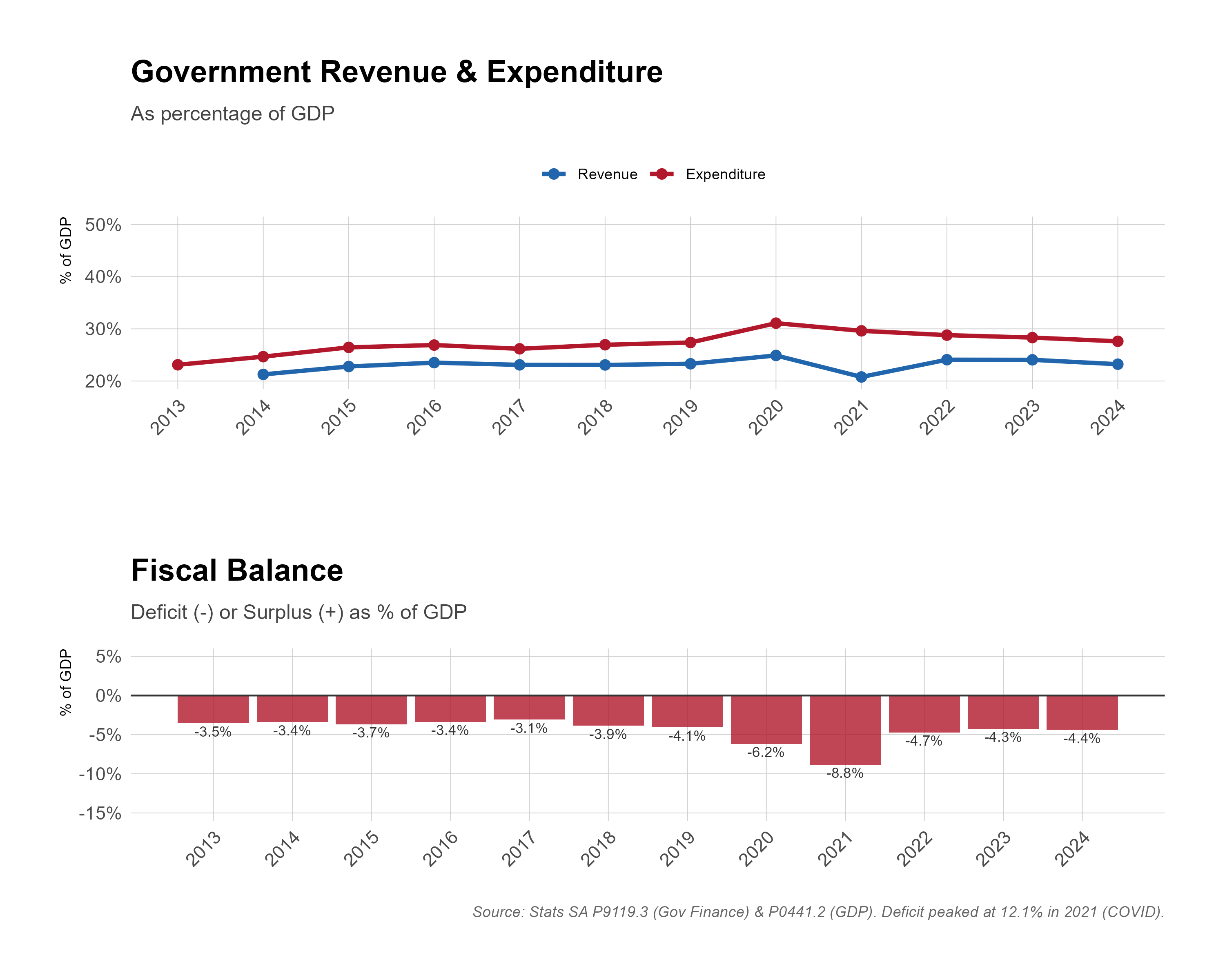
**Figure 2.1** presents the fiscal balance, showing the trajectory from consolidation through crisis.

<figure><img src="/files/xfpJH3ese2uw43Q3cd92" alt="Line chart showing South Africa&#x27;s fiscal balance as percentage of GDP from 2005-2024, illustrating deterioration from near-surplus in mid-2000s to deficits exceeding 6% of GDP by early 2020s, with COVID-19 causing the sharpest decline"><figcaption><p><strong>Figure 2.1:</strong> The Fiscal Balance. <em>Source: National Treasury, SARB. Note: The fiscal balance deteriorated from a near-surplus in the mid-2000s to deficits exceeding 6% of GDP by the early 2020s.</em></p></figcaption></figure>

***

## II. Fiscal Policy: From Prudence to Precariousness

Fiscal policy—the government's decisions about spending and taxation—is the most consequential area of economic policy (National Treasury 2024). It determines how much the state can invest in infrastructure, education, and health; how much it redistributes through grants and social programmes; and whether it can maintain these commitments sustainably over time. South Africa's fiscal trajectory since 1994 is a story of initial success followed by gradual erosion, culminating in the current crisis of debt sustainability (IMF 2024; World Bank 2018).

### A. The Consolidation Era (1996-2007)

The new democratic government inherited a challenging fiscal position (Gelb 1991). The apartheid state had increased spending in its final years while revenues declined amid recession and sanctions. Public debt, while not catastrophic by international standards, was elevated, and debt service absorbed resources that could otherwise have funded development. The ANC's electoral platform, the Reconstruction and Development Programme, had promised massive expansion of public services and infrastructure—promises that implied significant fiscal commitments (African National Congress 1994).

GEAR, adopted in 1996, prioritised fiscal consolidation (Department of Finance 1996). The strategy set explicit deficit reduction targets: from around 5.5 percent of GDP in 1995/96 to 3 percent by 2000. This required restraint on expenditure growth even as new social programmes were being rolled out. The approach was controversial within the ruling alliance, with critics arguing that it sacrificed transformation on the altar of fiscal orthodoxy (Bond 2000; Marais 2011).

Yet consolidation was achieved, and then exceeded (Du Plessis and Smit 2007; Calitz 2025). Calitz describes four post-apartheid phases: consolidation (1994-1999), a "healthy track record" (2000-2008), a "fiscal storm" (2009-2020), and renewed consolidation efforts (2021-present). By the early 2000s, deficits had narrowed to around 2 percent of GDP. By the mid-2000s, commodity-driven revenues supported primary surpluses (National Treasury 2008). Gross debt fell from around 50 percent of GDP in the late 1990s to below 30 percent by 2008, and South Africa held investment-grade ratings across major agencies.

This fiscal space was used partly to expand social programmes—the child support grant, old age pensions, and other transfers that would become central to the social protection system examined in Chapter 10 (Bhorat and Cassim 2014). It was also used to increase infrastructure investment, particularly ahead of the 2010 FIFA World Cup. The constraint of fiscal sustainability appeared, for a time, to be compatible with developmental objectives.

### B. Counter-Cyclicality and the Global Financial Crisis (2008-2012)

The 2008 global financial crisis tested fiscal frameworks worldwide (IMF 2009). In South Africa, the automatic stabilizers worked as intended: revenues fell as the economy contracted, while spending on grants and other programmes was maintained. The government also adopted deliberately countercyclical policies, accelerating infrastructure spending and avoiding the austerity that some other countries imposed (National Treasury 2009).

The result was a significant deterioration in the fiscal balance—from a near-surplus to deficits exceeding 4 percent of GDP (National Treasury 2012). But this was widely viewed as appropriate: using the fiscal space accumulated during good times to cushion the economy during bad times is precisely what sound fiscal policy prescribes. South Africa emerged from the crisis with its institutional credibility intact and its social fabric less damaged than it might otherwise have been.

The problem was what came next. The fiscal deterioration that was supposed to be temporary became persistent (World Bank 2018). The structural factors that had supported revenues during the boom—high commodity prices, rapid credit growth, buoyant consumption—did not return. But expenditure continued to grow.

### C. Fiscal Drift and the Wage Bill (2013-2019)

The period from roughly 2013 to 2019 saw gradual fiscal deterioration that Treasury struggled to arrest (National Treasury 2019; Sachs 2021). Sachs argues that the commodity boom created a mirage of permanent growth, encouraging expenditure commitments that proved unsustainable after the boom ended. Expenditure pressure was driven mainly by the wage bill, social grants, and bailouts of failing state-owned enterprises.

The **public sector wage bill** emerged as the largest and most politically intractable expenditure pressure (National Treasury 2020). Between 2006 and 2020, the compensation of government employees more than doubled in real terms—far outstripping productivity growth or private sector wage trends. This reflected both employment growth (the number of public servants increased) and above-inflation wage settlements, particularly in the period 2008-2012 when multi-year agreements locked in generous increases.

The wage bill now consumes approximately 32 percent of consolidated government expenditure—a share that crowds out spending on goods, services, and capital investment (National Treasury 2024). Attempts to restrain wage growth have faced fierce resistance from public sector unions, whose members are organised, vote, and form part of the governing alliance's base. The government's 2020 attempt to freeze wages was challenged in court; subsequent negotiations have produced settlements that, while lower than historical averages, often still exceed inflation.

**Social grants**, examined in detail in Chapter 10, have expanded both in coverage and value (SASSA 2024). The number of grant recipients grew from around 3 million in 2000 to 26.5 million by 2026—including approximately 7-8 million SRD recipients (National Treasury 2026). While grants are among the most effective anti-poverty interventions (Bhorat and Cassim 2014), their fiscal cost has grown substantially. The Social Development function's budget alone is projected to reach R466.4 billion by 2028/29. The extension of the SRD grant beyond the pandemic, responding to the unemployment crisis, added further to expenditure; the 2026 Budget extended it through 2027 but did not make it permanent.

**State-owned enterprise bailouts** have been a recurring drain on the fiscus (National Treasury 2024). Eskom alone has received over R150 billion in direct bailouts since 2008, plus additional support through debt relief announced in 2023 (Eskom 2024). South African Airways consumed tens of billions before finally being restructured. Transnet, Denel, the SABC, and other entities have required various forms of support (Zondo Commission 2022). These bailouts reflect the governance failures and state capture explored in Chapter 1; they also represent resources that could have funded development but instead covered the costs of mismanagement.

### D. The COVID-19 Shock, Aftermath, and Fiscal Turning Point (2020-2026)

The COVID-19 pandemic delivered an unprecedented fiscal shock (National Treasury 2021). GDP contracted by more than 6 percent in 2020—the largest decline in almost a century (Statistics South Africa 2021). Revenues collapsed as economic activity halted; expenditure surged as the government provided emergency support, including the SRD grant, loan guarantees for businesses, and enhanced healthcare spending.

The fiscal deficit widened to over 12 percent of GDP in 2020/21—the largest in the democratic era (National Treasury 2021). Public debt, which had been rising gradually, jumped sharply, exceeding 70 percent of GDP. The primary balance, which had briefly improved in the late 2010s as Treasury attempted consolidation, deteriorated again.

The post-pandemic fiscal challenge was severe (IMF 2024; Sachs et al. 2023). SCIS research suggests spending cuts did not deliver promised debt stabilisation while weakening service delivery (Sachs, Amra, Madonko, and Willcox 2023). Donaldson (2025) finds growth structurally constrained to 1-1.5 percent, with real fixed capital formation still below levels from fifteen years ago. Revenues improved temporarily with the 2021-22 commodity upswing, but underlying revenue growth remained weak while expenditure pressure stayed high (National Treasury 2024).

By 2025-2026, however, the fiscal trajectory showed signs of stabilisation—what Finance Minister Godongwana described as a "fiscal turning point" in the 2026 Budget Speech (National Treasury 2026). Several developments converged. The main budget primary balance swung from deficit to surplus in 2023/24 for the first time since before the global financial crisis, reaching 0.9 percent of GDP in 2025/26 and projected to grow to 2.3 percent by 2028/29. The consolidated budget deficit narrowed from over 9 percent in 2020/21 to 4.5 percent of GDP in 2025/26, with projections of 3.1 percent by 2028/29. In November 2025, Standard & Poor's upgraded South Africa's foreign currency sovereign rating from BB- to BB—the first credit upgrade from any major agency in sixteen years (S\&P Global 2025). Gross loan debt was projected to peak at 78.9 percent of GDP in 2025/26 before declining to 76.5 percent by 2028/29—not the indefinite upward trajectory that had seemed inevitable.

These improvements reflected several factors: stronger-than-expected SARS revenue collections (aided by improved compliance under Commissioner Kieswetter), expenditure restraint on the wage bill, the end of load shedding (which supported economic activity), commodity-driven revenue gains, and South Africa's removal from the FATF grey list (which improved investor confidence and demonstrated institutional reform capacity). The 2026 Budget withdrew the R20 billion in planned tax increases that had been pencilled into the 2025 MTBPS—including the politically toxic proposal to raise VAT from 15 to 17 percent—on the grounds that higher revenue collections had made them unnecessary (National Treasury 2026).

The 2026 Budget also introduced governance innovations aimed at making fiscal discipline durable. The Targeted and Responsible Savings (TARS) programme identified R12 billion in wasteful programmes for reallocation—redirecting funds from underperforming activities rather than simply cutting budgets. An early retirement programme (7,687 applications approved, with net savings of R5.5 billion over the MTEF) addresses the wage bill structurally. A ghost worker audit flagged 4,323 high-risk payroll fraud cases. And Treasury proposed fiscal responsibility legislation—a principles-based legal framework requiring each new administration to table a medium-term fiscal plan—that would embed fiscal discipline in law rather than relying solely on political commitment (National Treasury 2026). Whether these mechanisms prove durable will depend on implementation.

Caution is nonetheless warranted. The primary surplus and debt stabilisation depend on Treasury's growth and revenue projections materialising, on continued expenditure restraint, and on avoiding further SOE bailouts. Growth of 1.6 percent forecast for 2026 remains well below the 3 percent or more needed for meaningful fiscal sustainability and job creation. Debt service, at R420.6 billion in 2025/26 and projected to reach R469.3 billion by 2028/29, continues to consume over 20 percent of revenue even as its share slowly declines (National Treasury 2026). And the underlying structural constraints—narrow tax base, high unemployment, weak investment—have not been resolved.

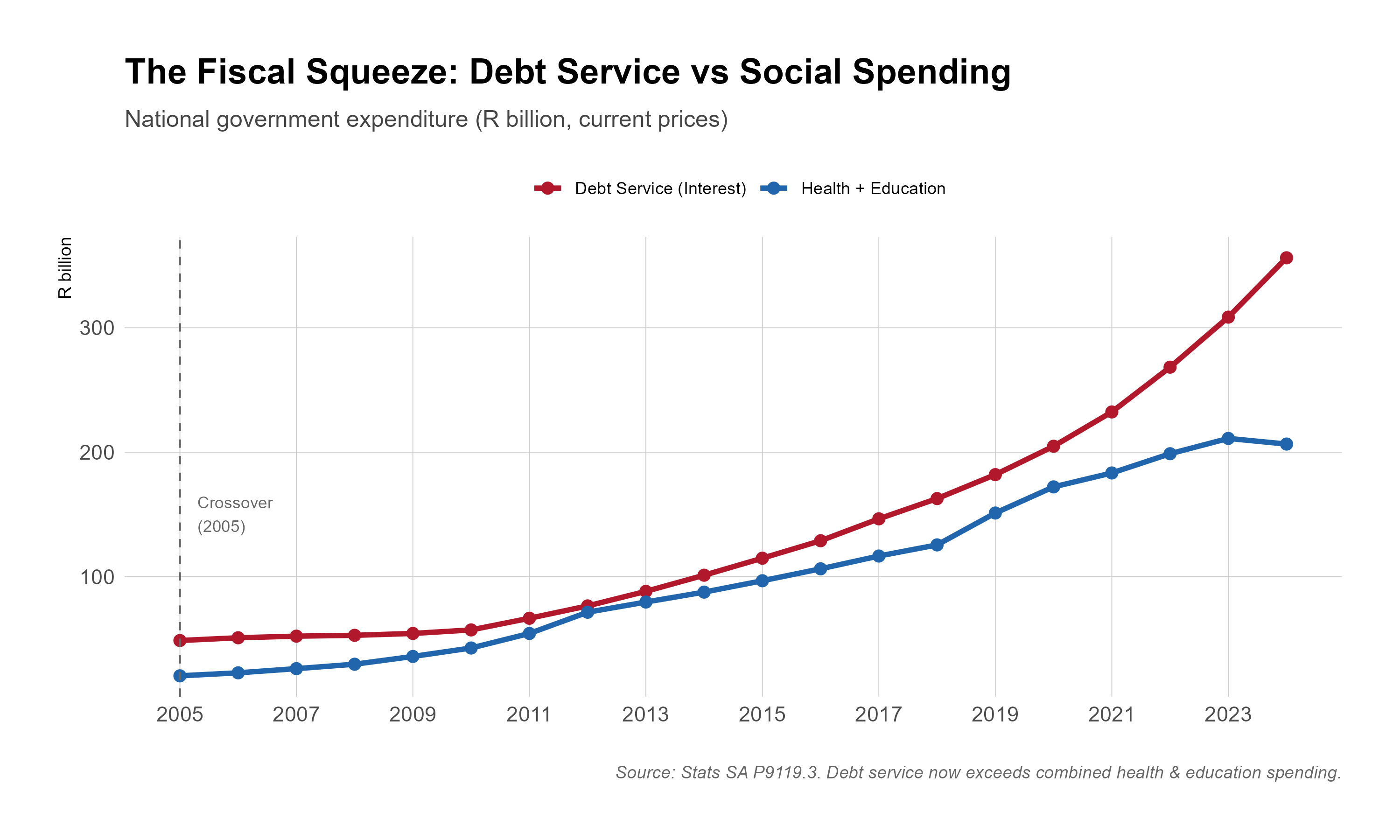
**Figure 2.2** illustrates the most troubling dimension of the fiscal crisis: debt service costs have grown to rival spending on major social functions.

<figure><img src="/files/9MGtvVTmcxkBwStEVzlO" alt="Bar chart comparing debt service costs to social spending categories, showing debt service at R420.6 billion in 2025/26 exceeding basic education spending and health spending individually"><figcaption><p><strong>Figure 2.2:</strong> Debt Service vs. Social Spending. <em>Source: National Treasury Budget Review 2026. Note: Debt service reached R420.6 billion in 2025/26, exceeding consolidated provincial and national spending on basic education or health individually. While the cost of servicing debt is projected to decline as a share of revenue—from 21.3 percent in 2025/26 to 20.2 percent by 2028/29—interest payments continue to crowd out developmental expenditure.</em></p></figcaption></figure>

### E. Debt Dynamics and the Path to Sustainability

South Africa's debt dynamics have deteriorated markedly (National Treasury 2024; IMF 2024). Several factors have contributed:

**Rising debt ratios**: Gross government debt rose from 24 percent of GDP in 2008 to 78.9 percent by 2025/26—more than a tripling in less than two decades (National Treasury 2026). The 2026 Budget projects that this represents the peak: debt is expected to decline to 77.3 percent in 2026/27 and 76.5 percent by 2028/29, assuming continued fiscal discipline and modest growth. Whether this turning point holds depends on the realism of Treasury's projections and the absence of further shocks (IMF 2024).

> **78.9%** — South Africa's gross debt-to-GDP ratio in 2025/26, projected to have peaked after tripling from 24% in 2008. Debt service of R420.6 billion still exceeds spending on basic education or health individually.

**Rising interest costs**: As debt rose and ratings were downgraded, borrowing costs increased (South African Reserve Bank 2024; Fedderke 2020). Fedderke finds debt-to-GDP is the strongest driver of the SA-US sovereign spread. Average borrowing costs exceed 10 percent, and debt service consumes over 20 cents of every revenue rand. Debt service rose from R50 billion in 2007/08 to R420.6 billion in 2025/26 and is projected to reach R469.3 billion by 2028/29—even as its share of revenue slowly declines from 21.3 to 20.2 percent (National Treasury 2026). The November 2025 S\&P upgrade from BB- to BB may, over time, help reduce borrowing costs, but the effect will be gradual: South Africa remains two notches below investment grade.

**The primary balance turning point**: To stabilise the debt ratio, the government must run primary surpluses—revenue must exceed non-interest spending. After more than a decade of primary deficits, this threshold was crossed in 2023/24, with the primary surplus projected to reach 1.6 percent of GDP in 2026/27 and 2.3 percent by 2028/29 (National Treasury 2026). This achievement is significant but fragile: it depends on continued expenditure restraint, sustained revenue performance, and growth materialising at or above the 1.6 percent forecast for 2026.

**Contingent liabilities and the green transition**: The debt trajectory is also subject to risks that do not appear on the main balance sheet. The Just Energy Transition Partnership (JETP), discussed in Section IV.A and in greater detail in Chapter 3, illustrates the tension: much of the $8.5 billion package consists of concessional loans rather than grants, and some commercial tranches may carry foreign-currency denomination, creating exchange-rate exposure for the fiscus. As the energy transition accelerates, these contingent liabilities must be integrated into sovereign debt management frameworks to avoid the kind of off-balance-sheet surprises that Eskom's guaranteed debt already demonstrated.

{% hint style="info" %}
**Worked Example: Debt Sustainability Arithmetic**

The debt sustainability equation is: **Δd = (r − g) × d + pb**, where *d* is the debt-to-GDP ratio, *r* is the real interest rate on debt, *g* is the real GDP growth rate, and *pb* is the primary balance (negative = deficit).

**South Africa's numbers (approximate, 2025/26):**

* Debt-to-GDP ratio (*d*): 79%
* Average real interest rate on government debt (*r*): \~5% (nominal \~10% minus inflation \~5%)
* Real GDP growth (*g*): \~1.5%
* Primary balance (*pb*): approximately +0.9% of GDP (a small primary surplus)

**Step 1: Calculate the interest-growth differential.** (r − g) = 5% − 1.5% = 3.5 percentage points

**Step 2: Calculate the debt-increasing effect of the interest-growth differential.** (r − g) × d = 3.5% × 79% = 2.8 percentage points of GDP

This means that even with zero primary deficit, debt would rise by 2.8 percentage points of GDP per year simply because interest rates exceed growth rates.

**Step 3: Add the primary balance.** Δd = 2.8% − 0.9% = 1.9 percentage points of GDP

Despite the primary surplus, debt is still rising—though more slowly than before. This illustrates why debt stabilisation requires a primary surplus large enough to offset the entire interest-growth differential.

**Step 4: What primary surplus would stabilise debt?** Set Δd = 0: 0 = (r − g) × d + pb → pb = −(r − g) × d = −2.8% of GDP

South Africa needs a primary surplus of 2.8% of GDP to stabilise debt at the current level. Treasury projects the primary surplus reaching 2.3% of GDP by 2028/29—close, but not yet sufficient. The gap illustrates why continued fiscal discipline is essential and why faster growth would ease the arithmetic considerably.

**Key insight**: If growth rose to 3% (closing the gap with the interest rate), the required primary surplus would fall to (5% − 3%) × 79% = 1.6% of GDP—a threshold already within projected reach. This illustrates why growth is the most powerful tool for fiscal sustainability, and why the current primary surplus, while a genuine achievement, is not by itself sufficient to resolve the debt challenge.
{% endhint %}

The formal debt sustainability arithmetic, however, rests on assumptions about future fiscal discipline that behavioural economics gives reason to question. Zimper and Gillingham (2017) model South Africa's public debt dynamics under various scenarios of fiscal commitment, showing that even modest deviations from announced consolidation paths—the kind that characterised the 2013-2019 drift—can shift the debt trajectory from stabilising to explosive within a few years. Their work underscores why credibility is not merely an asset for reducing borrowing costs but a mathematical precondition for debt sustainability itself.

Treasury's fiscal consolidation strategy—expenditure restraint (particularly on the wage bill), improved SOE performance, and stronger revenue collection—now shows results (National Treasury 2026). The 2023 Eskom debt relief package, where government assumed R254 billion of Eskom's debt in exchange for reforms, illustrated both the scale of the challenge and the difficult tradeoffs involved (National Treasury 2023). Eskom's subsequent return to profitability in 2024/25—its first surplus since 2016/17—and the end of load shedding suggest this gamble may be paying off, though municipal arrears to Eskom continue to escalate (National Treasury 2026). Government borrowing fell from R563 billion in 2025 to a projected R380 billion in 2026, and principal and interest payments came in R21 billion below the 2025 estimates.

#### Comparative Policy Box: Chile's Structural Balance Rule

Chile's approach to fiscal policy offers lessons for South Africa (Marcel et al. 2001; Schmidt-Hebbel 2006). Since 2001, Chile has operated under a structural balance rule that targets the fiscal balance adjusted for both the economic cycle and fluctuations in copper prices. This means:

* During commodity booms, windfall revenues are saved rather than spent;
* During downturns, the government can draw on accumulated savings without violating fiscal targets;
* Long-term fiscal commitments are anchored to structural (trend) revenues, not cyclical peaks.

The results have been impressive. Chile entered the 2008-09 global financial crisis with substantial fiscal buffers, which it deployed effectively to cushion the economy. Debt levels remained low by international standards. Borrowing costs have been consistently below those of similarly-rated sovereigns.

For South Africa, adaptation might involve:

* Publishing a structural balance target alongside headline fiscal projections, making explicit the cyclical and commodity adjustments;
* Establishing clear escape clauses for defined emergencies (natural disasters, pandemics, severe recessions);
* Creating a genuine stabilisation fund for commodity windfalls, rather than spending them as they arrive;
* Building a track record of adherence that would, over time, anchor market expectations and reduce borrowing costs.

The challenge is credibility. Chile built its framework over decades of consistent application. South Africa, having lost investment-grade status and missed multiple fiscal targets, would need to demonstrate commitment through performance, not merely announcement.

### F. The Revenue Side: Tax Policy and the Fiscal Squeeze

Fiscal sustainability depends on revenues as well as expenditure, yet South Africa's revenue trajectory has received less public attention than the expenditure debates. The tax system has been transformed since 1994, with notable achievements and growing structural challenges (National Treasury 2024; Davis Tax Committee 2018).

**Tax modernisation**: The post-apartheid period saw fundamental tax reform. The South African Revenue Service (SARS) was established as a semi-autonomous agency in 1997, rapidly improving compliance and administration. Personal income tax brackets were progressively adjusted to reduce the apartheid-era burden on lower-income earners. Corporate income tax was reduced from 48 percent in the early 1990s to 27 percent by 2023, aligning with international trends. Value-added tax (VAT) was maintained at 14 percent from 1993 until a controversial increase to 15 percent in 2018—the first increase in 25 years—with zero-rating of basic foodstuffs to mitigate the impact on the poor (National Treasury 2018).

**Revenue performance**: Tax revenues grew substantially in real terms through the 2000s, aided by economic growth, improved compliance, and bracket creep (as inflation pushed taxpayers into higher brackets). The tax-to-GDP ratio rose from around 22 percent in the late 1990s to approximately 26 percent by the mid-2010s—high by emerging market standards (National Treasury 2024). However, revenue growth has stagnated since 2015 as economic growth slowed and the tax base narrowed.

**Structural challenges**: The revenue base faces several interrelated pressures (Davis Tax Committee 2018; National Treasury 2024):

* **Narrow tax base**: Of the approximately 27 million individuals on the personal income tax register, only around 7.7 million are required to file returns, and fewer still pay tax above the threshold (SARS 2025). Revenue concentration is extreme: taxpayers earning above R750,000 per year—roughly 980,000 individuals, or about 12.5 percent of assessed taxpayers—contribute close to 60 percent of all PIT collected. At the very top, approximately 235,000 individuals in the top 0.4 percent of the population account for around one-third of PIT revenue (National Treasury 2026). This concentration reflects high unemployment (which excludes millions from the tax net), the large informal sector, and significant tax expenditures (deductions and exemptions). The narrow base makes revenues volatile and creates political constraints on rate increases—pushing the relatively small taxpaying class harder risks emigration and reduced compliance.
* **Corporate tax erosion**: Corporate income tax revenues have declined as a share of GDP, reflecting both deliberate rate reductions and base erosion through profit shifting by multinational enterprises (Davis Tax Committee 2018). South Africa's membership in the OECD/G20 Inclusive Framework on Base Erosion and Profit Shifting (BEPS) reflects awareness of this challenge, but implementation of the Pillar Two global minimum tax of 15 percent remains in progress.
* **SARS capacity**: The institutional damage inflicted on SARS during the state capture era—when a rogue unit was disbanded, experienced senior staff were dismissed, and the agency's independence was compromised—reduced compliance capacity (Nugent Commission 2018). Under Commissioner Edward Kieswetter (appointed 2019), SARS has been rebuilt, recovering an estimated R200 billion in additional revenue through improved compliance. But the damage to institutional culture and capability was real, and full recovery takes time.
* **Emigration and the tax base**: High-skilled emigration, particularly following load shedding and governance concerns, threatens the tax base. South Africa operates a residence-based tax system, meaning that emigrants who formally cease tax residency reduce the domestic tax pool. SARS data suggests rising emigration tax clearances since 2019, though the fiscal impact is difficult to quantify precisely (SARS 2024).

**The fiscal squeeze and the VAT episode**: The combination of stagnant revenues and rising expenditure pressures creates what Treasury has termed a "fiscal squeeze" (National Treasury 2024). Revenue cannot grow quickly enough through economic expansion alone to close the deficit; yet tax rate increases face diminishing returns given the narrow base and high existing rates. The 2025 Budget initially proposed increasing VAT by two percentage points—from 15 to 17 percent over two years—illustrating the difficult choices: VAT is the most efficient revenue instrument but falls disproportionately on the poor despite zero-rating, making it politically contentious. The proposal became a flashpoint within the Government of National Unity coalition, contributing to the Democratic Alliance's temporary withdrawal from the coalition, and was ultimately abandoned. The 2026 Budget formally withdrew the planned R20 billion in tax increases, citing stronger-than-expected SARS collections. Instead, personal income tax brackets and medical tax credits were adjusted for inflation for the first time since 2024, providing R13.7 billion in taxpayer relief (National Treasury 2026). The tax-to-GDP ratio nevertheless rose to 25.9 percent in 2025/26, up from 25.1 percent the prior year, driven by improved compliance rather than rate increases.

The fundamental challenge is that South Africa's tax base reflects its economic structure: high unemployment means fewer taxpayers, high informality means less taxable activity, and high inequality means revenue depends heavily on a small affluent group whose tax planning is sophisticated. Phiri (2018) estimates the Laffer curve for South Africa and finds evidence that the tax-to-GDP ratio is approaching the revenue-maximising threshold, suggesting that further rate increases may yield diminishing or even negative returns—a conclusion consistent with the political and economic resistance encountered by the 2025 VAT proposal. Addressing the revenue challenge thus requires addressing the structural constraints explored throughout this book—more employment, more formalisation, more broad-based growth—not merely tinkering with tax rates.

***

## III. Monetary Policy: The Anchor of Stability?

If fiscal policy has been South Africa's macroeconomic weakness, monetary policy has been its relative strength (South African Reserve Bank 2024). The South African Reserve Bank (SARB) has maintained low inflation, anchored expectations, and preserved financial stability through multiple shocks. Yet the monetary framework faces questions about its appropriateness for a country with South Africa's structural challenges, and debates about reform have intensified.

### A. The Constitutional Mandate and Institutional Independence

The SARB's mandate is established in the Constitution: "to protect the value of the currency in the interest of balanced and sustainable economic growth." This formulation is broader than a pure price stability mandate—it references growth as well as currency value—but the Bank has interpreted its primary responsibility as maintaining low and stable inflation (South African Reserve Bank 2024).

The Constitution also protects the SARB's independence, requiring that it "perform its functions independently" without fear or favour (Habib 2013). This independence has been contested politically—various ANC and Alliance resolutions have called for nationalisation of the Bank (ANC 54th National Conference 2017; COSATU 2017)—it remains one of the few central banks with private shareholders, a historical anomaly with no bearing on policy—and for changing the mandate to explicitly target employment. To date, these challenges have been resisted, and the Bank's operational independence has been maintained.

This independence has been an asset during periods of fiscal stress. When fiscal credibility has wavered, monetary policy credibility has provided an anchor (IMF 2024). International investors, assessing South Africa's policy framework, have generally viewed the SARB positively even when expressing concern about fiscal trends.

### B. The Inflation Targeting Framework

South Africa formally adopted inflation targeting in 2000, setting a target range of 3-6 percent for CPI inflation (South African Reserve Bank 2000). The framework represented a move away from the eclectic monetary policy of earlier decades—which had targeted various combinations of money supply, exchange rate, and other variables—toward a transparent, rules-based approach (Du Plessis and Smit 2007).

> **3-6%** — The SARB's inflation target band, maintained since 2000. This framework has successfully anchored expectations and kept inflation within or near the target for most of the past two decades.

The rationale for inflation targeting rests on several arguments:

**Anchoring expectations**: When economic agents (workers negotiating wages, firms setting prices, investors pricing assets) expect low and stable inflation, they act in ways that make low inflation easier to achieve. An explicit target, consistently pursued, anchors these expectations (South African Reserve Bank 2024).

**Reducing uncertainty**: Price stability reduces the noise in price signals, allowing resources to be allocated more efficiently. It also protects the purchasing power of wages and savings, with distributional benefits particularly for the poor (who are less able to hedge against inflation).

**Credibility and time consistency**: An independent central bank with a clear target can credibly commit to fighting inflation even when short-term political pressures might favour looser policy. This addresses the "time inconsistency" problem that plagued earlier monetary regimes.

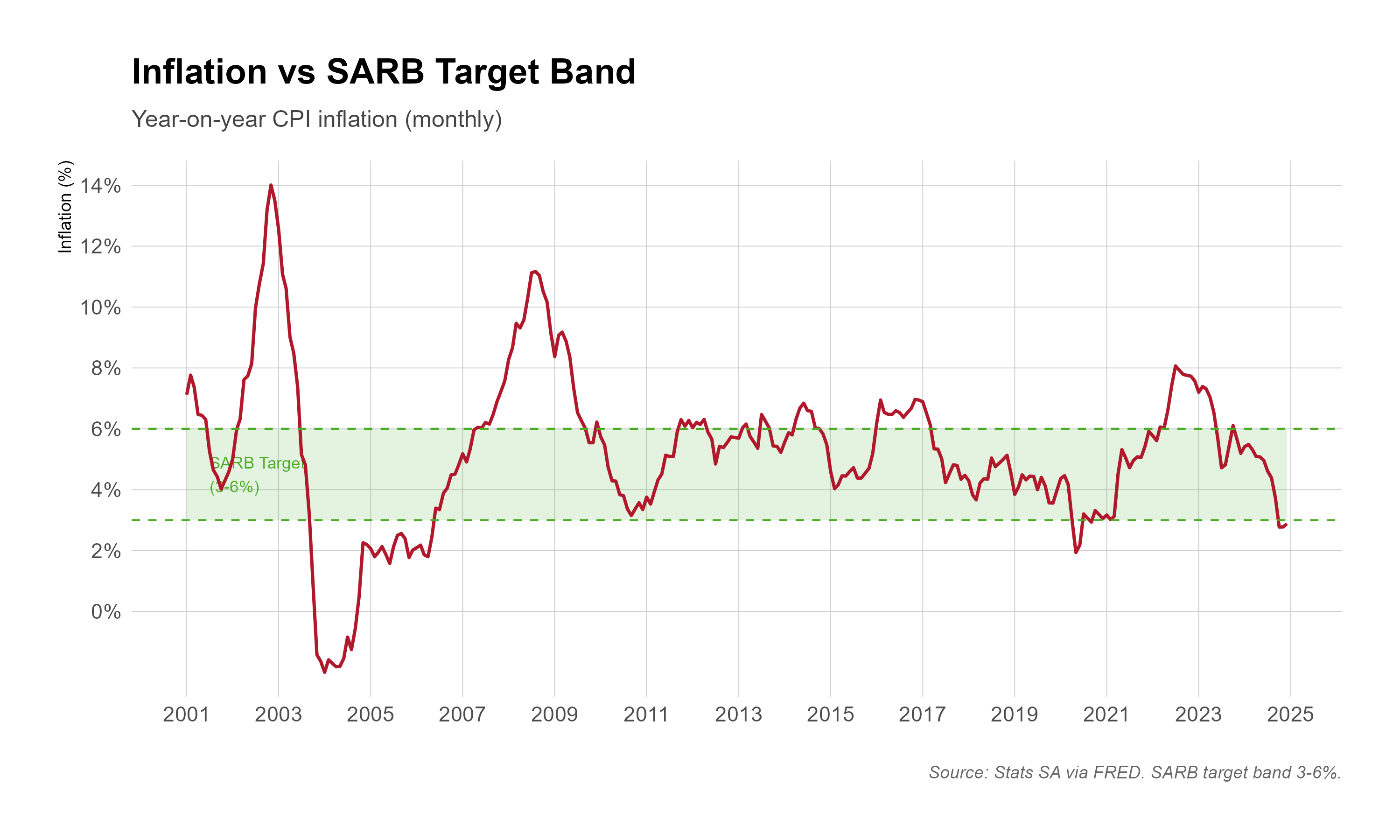
**Figure 2.3** shows inflation performance against the target band, illustrating the framework's general success in maintaining price stability.

<figure><img src="/files/KX2N6ZnIVd8lhC5aIFdT" alt="Line chart showing CPI inflation rate versus SARB&#x27;s 3-6% target band from 2000-2024, demonstrating successful inflation targeting with CPI mostly within the band, temporary breaches during 2002 exchange rate crisis, 2008 commodity shock, and 2022 energy crisis"><figcaption><p><strong>Figure 2.3:</strong> Inflation vs. Target Band. <em>Source: Stats SA, SARB. Note: Inflation has remained within or near the 3-6% target band for most of the past two decades, with breaches during commodity price shocks (2008, 2022) and the exchange rate crisis (2002).</em></p></figcaption></figure>

### C. Instruments and Transmission

The SARB's primary instrument is the repo rate—the interest rate at which it lends to commercial banks (South African Reserve Bank 2024). Changes in the repo rate transmit through the economy via several channels:

**Interest rate channel**: Higher repo rates raise lending rates (including the prime rate, typically repo plus 3.5 percentage points), increasing the cost of borrowing for households and firms. This dampens consumption and investment, reducing demand and thus inflationary pressure.

**Exchange rate channel**: Higher interest rates attract foreign capital seeking better returns, strengthening the rand. A stronger rand reduces import prices, directly lowering inflation, and also disciplines domestic producers who compete with imports.

**Expectations channel**: Central bank actions signal its commitment to the inflation target, influencing how economic agents form expectations about future inflation.

**Credit channel**: Higher rates may also reduce credit availability if banks become more cautious about lending (South African Reserve Bank 2024).

The Monetary Policy Committee (MPC) meets every two months to assess conditions and set the repo rate (South African Reserve Bank 2024). Its decisions are guided by the Quarterly Projection Model (QPM), a macroeconometric model that forecasts inflation and growth under various policy scenarios. The Bank has become increasingly transparent about its reasoning, publishing detailed statements and forecast fan charts.

**Transmission impairments**: In South Africa, monetary transmission is weaker than in many advanced economies for structural reasons (Loewald et al. 2021). Large groups outside formal finance do not respond to rate changes as textbook models assume. Administered prices (electricity, water, transport) are regulated and less responsive to demand management. Banking concentration can also weaken and unevenly distribute pass-through, particularly for small firms and lower-income borrowers (Competition Commission 2008).

These transmission impairments have practical consequences. Aron and Muellbauer (2007) estimate that the interest rate channel is significant but operates with long and variable lags of 12-18 months in South Africa. The exchange rate channel may be more important in practice: a 2023 SARB working paper estimates that roughly 40 percent of the inflation impact of monetary policy operates through the exchange rate, with rand appreciation reducing import prices relatively quickly. This means monetary tightening works partly by attracting capital inflows and strengthening the rand—a mechanism that simultaneously helps with inflation but may harm export competitiveness.

**Distributional consequences**: The transmission channels described above do not affect all income groups equally, and this asymmetry connects macroeconomic policy to lived experience and inequality. The "debt service channel" falls most heavily on the leveraged middle class: households with mortgage bonds, vehicle finance, and retail credit see their disposable income squeezed directly when the repo rate rises, and the prime-linked structure of South African household lending means the pass-through is near-immediate. By contrast, the poor—who lack access to formal credit and hold few financial assets—are largely invisible to interest rate policy but bear the brunt of the "inflation tax" that monetary tightening is designed to prevent. Rising food and transport prices erode purchasing power for those without savings, property, or inflation-linked wage agreements to serve as hedges. The result is that monetary tightening and monetary loosening each impose costs on different segments of an already deeply unequal society, a distributional dimension that the headline inflation target does not capture (see Chapter 10 for broader inequality dynamics).

### D. Performance and Debates

By the standard of hitting its target, the SARB has been largely successful (Statistics South Africa 2024). Inflation has remained within or near the 3-6 percent band for most of the past two decades. When breaches have occurred—during commodity price spikes in 2008 and 2022, during the rand's sharp depreciation in 2002—they have been temporary, and inflation has returned to target.

A comprehensive review by Viegi (2025) evaluates the SARB's monetary policy record since 1994, highlighting its dual role as inflation controller and "credibility provider of last resort" during periods when fiscal credibility wavered. However, several critiques and debates surround the framework:

**The cost to growth and employment**: Critics argue that the SARB's focus on inflation has come at the cost of output and employment (Bond 2000; Gillian Hart 2013). Interest rates, they contend, have been kept higher than necessary, constraining credit and investment. The Bank's tendency to tighten into supply shocks (like electricity constraints or oil price increases) may be particularly costly, since these shocks do not respond to demand management. Phiri (2019) provides empirical support for this concern, finding evidence of asymmetric monetary policy transmission in South Africa: interest rate increases contract output more sharply than equivalent rate cuts stimulate it. If the costs of tightening systematically exceed the benefits of easing, the cumulative effect of the SARB's cautious stance may have been more contractionary than conventional symmetric models would suggest—a finding with direct implications for how the Bank should calibrate its response to supply-side shocks.

**The "dual mandate" proposal**: Some have called for the SARB's mandate to be amended to explicitly include employment or growth alongside price stability, similar to the U.S. Federal Reserve's dual mandate (COSATU 2017; Padayachee 2010). Proponents argue this would give the Bank greater flexibility to support the economy during downturns. Opponents worry it would compromise credibility and ultimately deliver neither price stability nor growth.

**Supply-side constraints**: Much of South Africa's inflation reflects supply-side factors—administered prices (electricity, water, transport), food prices affected by drought, and wage settlements in concentrated industries (Statistics South Africa 2024). Monetary policy, which works through demand, is poorly suited to addressing supply-driven inflation. Raising interest rates when electricity prices spike may reduce inflation somewhat (by crushing demand) but at considerable cost to growth.

**The inflation target level**: A significant recent contribution is Loewald, Steinbach, and Rakgalakane (2025), who make the case for lowering South Africa's 25-year-old 3–6 percent target range. They argue that a lower target would reduce inflation risk premiums, lower borrowing costs, and improve growth prospects. This SARB working paper was central to the policy debate that led to National Treasury announcing a new 3 percent target (with ±1 percentage point tolerance band) in 2025—a landmark shift in the framework.

**Financial stability**: Since the global financial crisis, central banks worldwide have grappled with the relationship between monetary policy and financial stability (South African Reserve Bank 2024). The SARB has been assigned responsibility for macroprudential regulation—ensuring the stability of the financial system as a whole. How this interacts with the inflation target remains an evolving area.

#### Comparative Policy Box: Indonesia's Flexible Inflation Targeting

Indonesia offers an example of inflation targeting that incorporates greater flexibility than the textbook version. Bank Indonesia targets inflation (currently 2.5% ± 1%) but also:

* Pays explicit attention to exchange rate stability, intervening in foreign exchange markets when volatility threatens stability;
* Uses liquidity management tools (reserve requirements, standing facilities) actively alongside interest rate policy;
* Coordinates closely with the government on policy mix issues;
* Communicates clearly about the balance between inflation control and growth support.

This "inflation targeting plus" approach has helped Indonesia navigate commodity price swings and external shocks while maintaining reasonable growth. Inflation has been controlled without the stop-go pattern that characterised earlier regimes.

For South Africa, the lesson may be that flexibility within a credible framework is possible. The SARB already practices more flexibility than pure IT orthodoxy would suggest—it looks through temporary shocks, considers the output gap, and phrases its commitment in terms of the "sustainable" inflation path. Making this flexibility more explicit, and communicating it more clearly, might improve outcomes without sacrificing the credibility anchor.

***

## IV. The External Sector: Vulnerability and Volatility

South Africa is a small, open economy deeply integrated into global markets (South African Reserve Bank 2024). Export performance depends on external demand and commodity prices beyond domestic control. Reliance on capital inflows to finance investment and current account deficits also exposes the country to shifts in global risk appetite. The rand has been among the most volatile major emerging-market currencies (IMF 2024), making the external sector central to macroeconomic vulnerability.

### A. The Balance of Payments Structure

The balance of payments records all economic transactions between South Africa and the rest of the world (South African Reserve Bank 2024). Its two main components are the current account (trade in goods and services, plus income flows) and the financial account (capital flows).

**The current account** has been in deficit for most of the post-apartheid period (South African Reserve Bank 2024). This means South Africa spends more on imports and income payments abroad than it earns from exports and income from abroad. Several factors drive this:

* **Trade balance**: South Africa exports commodities (gold, platinum, coal, iron ore, manganese) and some manufactured goods (vehicles, machinery) while importing oil, machinery, electronics, and consumer goods. The trade balance fluctuates with commodity prices: when prices are high (as in 2021-22), South Africa runs trade surpluses; when prices fall, deficits return.
* **Services balance**: South Africa typically runs a deficit in services trade. Tourism earnings are significant (explored in Chapter 7), but expenditure on transport, insurance, and business services abroad exceeds receipts (Statistics South Africa 2024). The COVID-19 pandemic devastated tourism earnings, worsening the services deficit (UNCTAD 2022).
* **Income balance**: South Africa pays significant dividends and interest to foreign investors who own South African assets, while receiving relatively less income from South African investments abroad. This "primary income" deficit reflects the country's status as a net debtor.

The current account deficit, when it persists, must be financed by inflows on the financial account (South African Reserve Bank 2024). These inflows can take several forms:

* **Foreign direct investment (FDI)**: Long-term investment in productive capacity—building factories, acquiring companies, developing mines. FDI is generally considered the most stable form of capital inflow, but South Africa has attracted disappointingly little relative to its potential (UNCTAD 2024).
* **Portfolio investment**: Foreign purchases of South African equities and bonds. Portfolio flows are more volatile than FDI—they can reverse quickly when global risk appetite shifts or domestic conditions deteriorate. South Africa has been heavily dependent on portfolio inflows (South African Reserve Bank 2024).
* **Other investment**: Bank lending, trade credit, and other flows.

This structure creates vulnerability (IMF 2024). When global investors become risk-averse—during financial crises, geopolitical shocks, or simply shifts in sentiment—portfolio flows can reverse, pressuring the exchange rate and potentially triggering broader instability.

**The Just Energy Transition Partnership (JETP)**: Decarbonisation adds a new external-financing channel. The $8.5 billion JETP announced in 2021 provides substantial support but also introduces risk. Much of the package is concessional debt rather than grants, and some commercial financing may be foreign-currency denominated, creating exchange-rate exposure for the fiscus. While the transition is essential (Chapter 3), these contingent liabilities must be managed carefully.

### B. Exchange Rate Dynamics

The South African rand (ZAR) is freely floating, meaning its value is determined by supply and demand in foreign exchange markets rather than by central bank intervention (though the SARB does intervene occasionally to smooth volatility) (South African Reserve Bank 2024). The rand has been one of the most volatile currencies among major emerging markets (IMF 2024).

Several factors drive rand movements:

**Commodity prices**: As a major commodity exporter, South Africa benefits when commodity prices rise (World Bank 2024). Higher commodity prices improve the trade balance and attract investment into the mining sector, strengthening the rand. When commodity prices fall, the reverse occurs.

**Global risk appetite**: The rand is often described as a "risk currency" or proxy for emerging market sentiment (South African Reserve Bank 2024). When global investors are confident and seeking yield, they invest in emerging markets including South Africa, strengthening the rand. When fear rises (during the 2008 crisis, the COVID shock, or simply "risk-off" episodes), investors flee to safe havens like the U.S. dollar, weakening the rand.

**Domestic factors**: Fiscal credibility, political stability, growth prospects, and inflation differentials also affect the exchange rate. The rand weakened sharply during the state capture era (2015-2017) and recovered somewhat during the reform period that followed (Chipkin and Swilling 2018).

The exchange rate matters for several reasons:

**Inflation**: A weaker rand raises the price of imports, directly feeding into inflation. About 15-20 percent of the consumer basket is imported goods; a 10 percent depreciation might add 1-2 percentage points to inflation, depending on pass-through.

**Competitiveness**: A weaker rand makes exports cheaper in foreign currency and imports more expensive in rand, potentially boosting export industries and domestic production. However, the benefits depend on having export capacity to expand and on intermediate imports not being too costly.

**Debt burden**: For entities with foreign-currency debt, depreciation increases the local-currency value of that debt. The government has limited foreign-currency exposure, but some SOEs and corporations are more exposed.

**Uncertainty**: Exchange rate volatility—even when around a stable average—creates uncertainty that can deter investment and complicate planning.

**Exchange rate pass-through**: How exchange-rate shifts feed into domestic prices is a key monetary-policy parameter. SARB studies estimate that a 10 percent rand depreciation adds roughly 1.0-1.5 percentage points to CPI over 12-18 months (South African Reserve Bank, Monetary Policy Review 2023). Pass-through is asymmetric—faster for depreciations than appreciations—and has declined over time as inflation expectations have become better anchored (Razafimahefa 2012). It nonetheless remains relatively high by emerging-market standards.

The rand's long-term trend has been one of nominal depreciation. In real effective terms—adjusting for inflation differentials with trading partners—the rand has been more stable, reflecting the purchasing power parity mechanism: higher domestic inflation relative to trading partners leads to nominal depreciation that roughly preserves competitive position. However, deviations from purchasing power parity can be large and persistent, creating periods of overvaluation (which hurts exporters) or undervaluation (which contributes to inflation).

### C. The Twin Deficits Problem

Fiscal and current account deficits are related through what economists call the "twin deficits" hypothesis (IMF 2024). The intuition is straightforward: when the government borrows more than domestic savings can finance, the additional financing must come from abroad, widening the current account deficit. The underlying logic rests on the national income accounting identity:

$$
(S - I) + (T - G) = (X - M)
$$

where private savings minus investment, plus the government fiscal balance, must equal the external balance. When the fiscal deficit widens (T - G becomes more negative), it drains national savings available to finance domestic investment, necessitating foreign capital inflows to close the gap. South Africa's chronically low household savings rate—among the lowest of major emerging markets—means there is little private-sector buffer to absorb fiscal deterioration, making the current account deficit a direct symptom of a national savings gap rather than simply a trade competitiveness problem. Zimper (2014) applies behavioural economics to this puzzle, showing that hyperbolic discounting and present bias help explain why even middle-income South African households fail to save adequately for retirement—a finding with implications for the design of any mandatory retirement system, and one that suggests the savings gap is not merely a matter of income levels but of institutional design that fails to account for predictable cognitive biases.

South Africa's current account deficit has a distinctive structural feature that complicates simple policy prescriptions: a substantial portion reflects **primary income outflows**—dividends and interest payments to foreign holders of South African assets—rather than excessive goods imports. Foreign ownership of JSE-listed equities and government bonds generates persistent outflows that do not respond to typical trade policy instruments. This "dividend drain" means that even trade surpluses (as occurred in 2021-22 during the commodity boom) may not translate into current account surpluses if income payments are large enough. The structural nature of these outflows makes the current account deficit harder to address than a simple "consuming more than we produce" diagnosis would suggest.

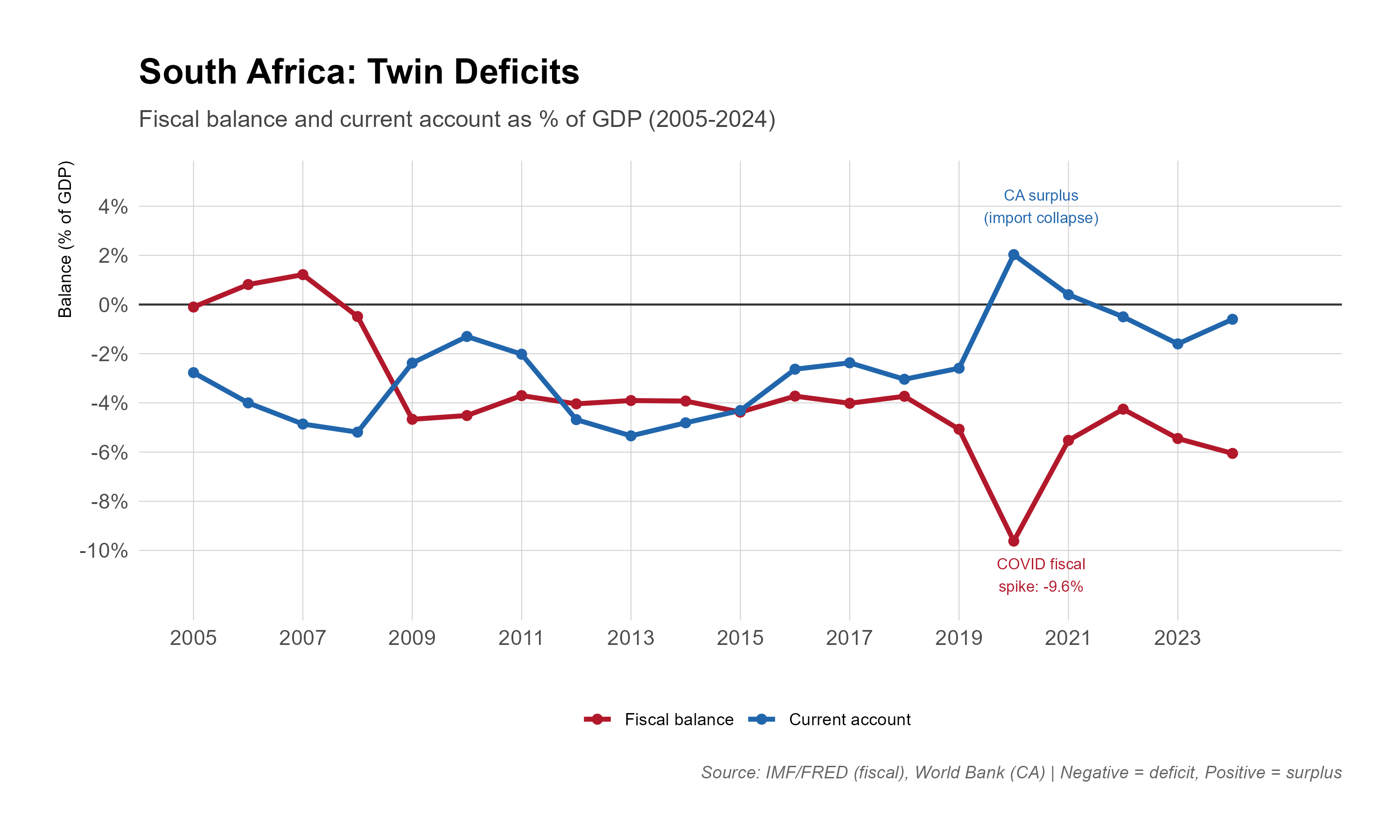
**Figure 2.4** illustrates this relationship for South Africa, showing the co-movement of fiscal and current account deficits (National Treasury 2024; South African Reserve Bank 2024).

<figure><img src="/files/lrrk38kVfCauog6BNxGw" alt="Dual-axis line chart showing fiscal balance and current account balance as percentage of GDP from 2005-2024, illustrating co-movement of twin deficits with combined deficit reaching 6.7% of GDP by 2024"><figcaption><p><strong>Figure 2.4:</strong> Twin Deficits. <em>Source: National Treasury, SARB, World Bank. Note: The combined fiscal and current account deficit reached 6.7% of GDP by 2024, creating external financing needs that expose the country to global capital flow volatility.</em></p></figcaption></figure>

The twin deficits create a vulnerability loop:

1. Fiscal deficits require financing; if domestic savings are insufficient, foreign financing is needed.
2. Foreign financing typically comes as portfolio inflows (bond purchases), which are volatile.
3. If investors become concerned about fiscal sustainability, they may demand higher interest rates or reduce their holdings.
4. Capital outflows weaken the exchange rate, increasing inflation and potentially forcing the central bank to raise interest rates.
5. Higher interest rates further slow growth, reducing revenues and worsening the fiscal deficit.

This adverse feedback loop has not fully materialised in South Africa, but the risk is real. The country's loss of investment-grade status between 2017 and 2020 was in part a reflection of concerns about this dynamic.

***

## V. Coordination and Credibility

Macroeconomic policy is not simply the sum of fiscal and monetary policies independently conducted (IMF 2024). The two interact, sometimes supporting each other and sometimes conflicting. The credibility of the overall framework—the degree to which markets and economic agents believe policymakers will deliver on their commitments—affects the effectiveness and cost of all policy actions.

### A. Fiscal-Monetary Coordination

When fiscal and monetary policies are well-coordinated, they can be mutually reinforcing (South African Reserve Bank 2024). Fiscal consolidation that credibly stabilises debt allows the central bank to maintain lower interest rates, supporting growth. Monetary policy that keeps inflation low preserves the purchasing power of government revenues and reduces debt service costs.

When coordination breaks down, however, each policy can undermine the other:

**Fiscal dominance**: If deficits persist and debt rises, markets may doubt repayment capacity without eventual inflation (IMF 2024). Soobyah, Mamburu, and Viegi (2023) examine whether South Africa is drifting toward such a regime, where debt dynamics constrain monetary autonomy. In that setting, rates may need to stay high to retain capital inflows even when domestic demand is weak. Loewald (2024) argues that with low multipliers and weak potential growth, fiscal stimulus may raise inflation more than growth, reinforcing the case for debt reduction. The Harvard Growth Lab's diagnostic (Hausmann et al. 2023) goes further, estimating that South Africa's fiscal multipliers have turned *negative*: rather than boosting growth, expansionary fiscal policy has hurt it, largely by increasing the cost of capital and crowding out private investment. The finding underscores that South Africa's binding constraints are supply-side — energy, logistics, state capacity — and fiscal demand stimuli are the wrong tool for supply-side problems.

**Monetary tightening into fiscal expansion**: If fiscal policy is loose (running large deficits) while monetary policy is tight (high interest rates), the combination can produce the worst of both worlds: high borrowing costs that slow the private sector, combined with government spending that adds to demand and inflation. The policy mix becomes internally inconsistent.

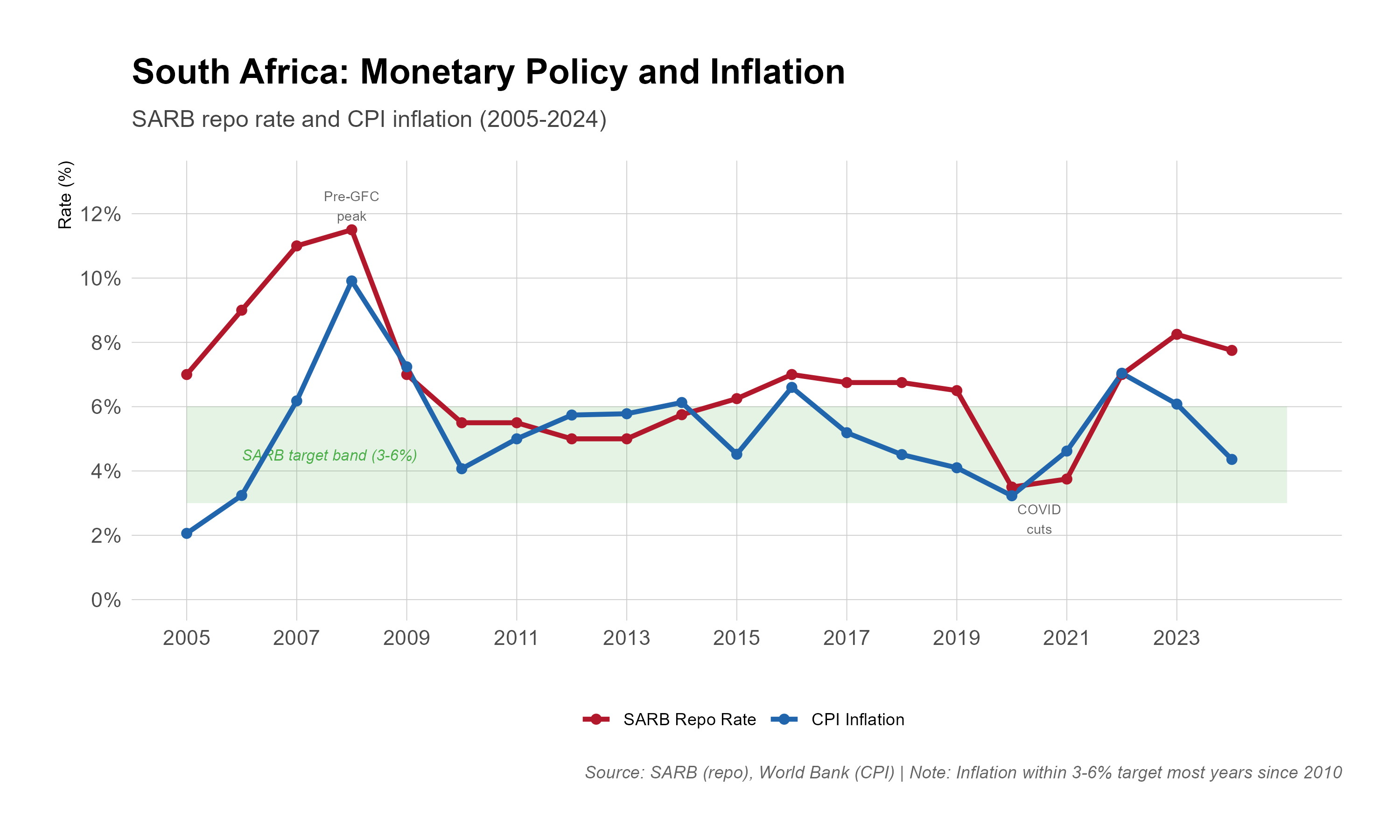
**Figure 2.5** shows the repo rate and inflation, illustrating monetary policy's response to various shocks.

<figure><img src="/files/cVhmKoi947ifNLvlvnpl" alt="Line chart showing SARB repo rate and CPI inflation from 2005-2026, with repo rate ranging from 3.5% during COVID lows to peaks during the 2008 inflation surge, at 7.50% as of early 2026"><figcaption><p><strong>Figure 2.5:</strong> Repo Rate and Inflation. <em>Source: SARB. Note: The repo rate has ranged from 3.5% (during COVID) to peaks during the 2008 inflation surge. The repo rate stood at 7.50% as of early 2026, following a cutting cycle that began in September 2024 from 8.25%.</em></p></figcaption></figure>

The SARB and Treasury have mechanisms for coordination—regular meetings, joint scenarios in budget documents, shared staff analyses—but these are not always sufficient to ensure consistency. The SARB's independence means it will pursue its inflation target regardless of fiscal policy choices; Treasury cannot rely on monetary accommodation to finance deficits.

### B. Credibility and the Ratings Agencies

Credibility—the market's belief that policymakers will follow through on their commitments—is a crucial asset (IMF 2024). Credible commitments to low inflation allow the central bank to achieve its target with smaller interest rate movements. Credible commitments to fiscal sustainability allow the government to borrow at lower rates.

South Africa's credibility has eroded over the past decade (National Treasury 2024). The loss of investment-grade credit ratings—from S\&P in 2017, Fitch in 2017, and Moody's in 2020—represented a formal downgrade of the market's assessment of fiscal sustainability. The consequences have been significant:

**Higher borrowing costs**: Sub-investment-grade borrowers pay higher interest rates than investment-grade borrowers (South African Reserve Bank 2024). South Africa's 10-year government bond yield has typically been 200-400 basis points higher than it might be with an investment-grade rating.

**Index exclusion**: Some bond indices include only investment-grade securities. When South Africa lost its ratings, it was excluded from certain indices, forcing some institutional investors to sell their holdings.

**Risk premium**: Beyond the direct rating effect, the loss of credibility adds a general risk premium. Investors demand additional compensation for the uncertainty about policy direction.

Rebuilding credibility is a long-term project (IMF 2022). It requires consistent performance—meeting targets, delivering reforms, demonstrating that policy commitments will be honoured—over an extended period. Announcements and promises alone are not sufficient; the market must see evidence of follow-through.

#### Comparative Policy Box: Colombia's Medium-Term Fiscal Framework

Colombia has developed a sophisticated medium-term fiscal framework that aims to enhance credibility and coordination:

* **Fiscal Rule**: A structural balance rule that targets the overall balance adjusted for the cycle and for oil price fluctuations (similar to Chile but adapted to Colombia's specific circumstances);
* **Medium-Term Expenditure Framework (MTEF)**: Multi-year expenditure ceilings by sector, aligned with revenue projections and debt sustainability;
* **Independent Fiscal Institution**: An autonomous body that monitors compliance and provides independent forecasts;
* **Escape Clauses**: Defined circumstances under which the rule can be suspended (natural disasters, severe recessions), with clear procedures for returning to the target path.

Peru has implemented similar mechanisms, with both countries maintaining investment-grade ratings and relatively low borrowing costs by regional standards.

For South Africa, strengthening the medium-term framework might involve:

* Making expenditure ceilings genuinely binding, with real consequences for breaches;
* Publishing structural balance estimates that strip out cyclical and commodity effects;
* Considering an independent fiscal council to monitor compliance and provide credible forecasts;
* Clearly distinguishing capital and current spending, with protection for growth-enhancing investment.

***

## VI. Conclusion: Is the Framework Fit for Purpose?

South Africa's macroeconomic framework achieved its primary objectives: inflation was tamed, and for a period fiscal sustainability was maintained (Du Plessis and Smit 2007; Hirsch 2005). These were genuine accomplishments, particularly given the challenging inheritance of the transition and the pressures of democratic expectations for rapid delivery. The fiscal improvements evident in 2025-2026—a restored primary surplus, projected debt stabilisation, and the first sovereign credit upgrade in sixteen years—suggest that the consolidation framework can still produce results when implemented with consistency.

Yet stability has not delivered development (Marais 2011; Habib 2013). Unemployment is higher than in 1994, growth has stagnated, inequality remains extreme, and the fiscal position, while stabilising, remains precarious at nearly 79 percent of GDP in debt. What was meant to underpin transformation can still appear, to critics, as a constraint on activist policy (Bond 2000).

Three perspectives on this dilemma merit examination:

**The "good policies, bad outcomes" view**: Perhaps the macroeconomic framework was appropriate but insufficient (Hirsch 2005). Stability was necessary but not sufficient; the binding constraints on growth lie elsewhere—in infrastructure, education, labour markets, regulatory quality, and governance (National Planning Commission 2012). On this view, the task is not to reform the macro framework but to complement it with structural reforms.

**The "wrong priorities" view**: Perhaps the emphasis on stability came at the expense of growth and employment (Bond 2000; Marais 2011). Interest rates were kept too high for too long; fiscal consolidation was premature or excessive; policy was captured by financial interests at the expense of workers and the unemployed. Muller (2020) sharpens this critique methodologically, arguing that the orthodox framing of South Africa's fiscal challenges—with its near-exclusive focus on debt-to-GDP ratios and primary balance targets—obscures the distributional consequences of austerity and the opportunity costs of foregone public investment. If the counterfactual to fiscal consolidation was higher-quality infrastructure and better-educated workers, the "prudent" path may have been less prudent than it appeared. On this view, a different macro framework—more tolerant of inflation, more willing to use fiscal policy actively, perhaps with a different central bank mandate—might have produced better outcomes.

**The "implementation failure" view**: Perhaps the framework was appropriate in design but failed in implementation (Chipkin and Swilling 2018). Fiscal policy became hostage to the wage bill and SOE bailouts rather than investing in productive capacity. Monetary policy transmitted poorly through broken credit channels. Corruption and state capture undermined everything (Zondo Commission 2022). On this view, the task is to rebuild institutional capacity to implement existing frameworks effectively.

**The "institutional resilience" view**: A fourth perspective asks not why South Africa's macroeconomic outcomes were disappointing, but why they were not catastrophic. The independence of the SARB and the technical persistence of Treasury acted as a breakwater, preventing full macroeconomic collapse during the state capture era. Other emerging markets facing comparable governance crises—Turkey's politicised central bank, Argentina's serial defaults—experienced hyperinflation, currency collapse, or sovereign default. South Africa avoided all three, in large part because its core macroeconomic institutions retained enough autonomy and technical credibility to anchor expectations even as other parts of the state were hollowed out (Memory and Sobel 2023). On this view, institutional resilience is not merely a background condition but the central achievement of the post-apartheid macroeconomic project—one that should inform how reformers think about which institutions to protect even as they press for change elsewhere.

Each perspective contains elements of truth. The structural constraints are real; Chapter 3 on infrastructure and Chapter 8 on labour markets will document them in detail. But it is also true that macroeconomic policy choices have consequences, and different choices might have produced different outcomes.

Looking forward, several reform directions merit consideration (IMF 2024; World Bank 2018):

**Fiscal framework**: Adopting a credible fiscal rule, with structural balance targets and clear escape clauses, could help rebuild credibility and reduce borrowing costs (IMF 2022; Marcel et al. 2001). Protecting capital spending within a constrained envelope would maintain growth-enhancing investment. Addressing the wage bill and SOE drains is essential but politically difficult.

**Monetary framework**: The inflation targeting framework has served well and should be preserved, but with greater transparency about flexibility (South African Reserve Bank 2024). Communicating clearly that the Bank looks through temporary shocks, considers output gaps, and coordinates with fiscal policy would improve understanding without sacrificing credibility.

**External vulnerability**: Reducing dependence on volatile portfolio flows requires attracting more FDI (through reforms that improve the investment climate) and building foreign exchange reserves (which provide a buffer against sudden stops) (UNCTAD 2024). Export promotion—both traditional commodities and new sectors—would improve the current account.

**Coordination**: Better mechanisms for fiscal-monetary coordination, including joint communication on the policy mix and shared scenario analysis, would improve coherence (IMF 2022). An independent fiscal council could provide credible monitoring and forecasting.

None of these reforms is easy. Each faces political obstacles, requires institutional capacity that may be lacking, and involves tradeoffs that reasonable people might assess differently. The fiscal improvements of 2025-2026 have bought time and reduced immediate pressure, but the underlying vulnerabilities—high debt, narrow tax base, weak growth, and dependence on expenditure restraint—have not been resolved (National Treasury 2026). South Africa's macroeconomic framework must continue to evolve if it is to support, rather than constrain, the development agenda.

**Chapter Summary**

South Africa's macroeconomic story since 1994 is one of institutional achievement undermined by structural failure—and, more recently, cautious recovery. The country built credible fiscal and monetary institutions that delivered stability—lower inflation, narrower deficits, and international credibility. For a period, this seemed to validate the GEAR bargain. But the commodity boom masked deeper weaknesses: the framework could anchor prices without generating sufficient employment and investment. When the boom ended, constraints in the tax base, wage bill, SOEs, and growth model became binding. Debt tripled and debt service now absorbs resources that could otherwise support development. The fiscal improvements of 2025-2026—primary surpluses, projected debt stabilisation, a credit upgrade—represent a genuine turning point, but one that depends on sustained discipline and faster growth to become durable.

The monetary framework has been more durable but faces its own limitations: transmission impairments mean rate changes have muted effects on much of the population, while the exchange rate channel that does work creates its own vulnerabilities. The external sector compounds everything: persistent current account deficits financed by volatile portfolio flows leave the country exposed to shifts in global sentiment that South Africa can neither predict nor control.

The central lesson is that macroeconomic stability is necessary but radically insufficient. Without addressing the structural constraints explored in the chapters that follow—broken infrastructure, failing education, dysfunctional labour markets—no macroeconomic framework, however well-designed, can deliver inclusive growth. The macro framework must be maintained, but it cannot carry the weight of development alone.

### Binding Constraints Connection

The macroeconomic framework both shapes and is shaped by the binding constraints. The **investment collapse** is directly visible in falling GFCF—from 21% to 13% of GDP—driven by fiscal uncertainty and infrastructure failures. The **energy crisis** (Chapter 3) reduced growth for years, eroding the tax base and widening the fiscal deficits documented in this chapter; its resolution through load shedding's end in 2025 contributed to the improved revenue collections that enabled the fiscal turning point. **State capacity erosion** at SOEs necessitated bailouts exceeding R150 billion, consuming fiscal space that could have funded the education (Chapter 9) and infrastructure (Chapter 3) investments needed to ease other constraints. The **labour market dysfunction** (Chapter 8) limits both growth potential and tax revenue, while **human capital deficits** (Chapter 9) constrain productivity growth that would generate the revenues needed for fiscal sustainability. The macroeconomic framework is thus both a victim of the binding constraints (weak growth undermines fiscal and monetary space) and a potential contributor to loosening them (credible fiscal management reduces borrowing costs and attracts the investment needed to address infrastructure and skills gaps).

{% hint style="success" %}
**Key Takeaways**

1. South Africa's macroeconomic framework achieved its primary goal of price stability (inflation within the 3-6% target band) but failed to deliver the growth and employment that were its ultimate justification.
2. Fiscal policy evolved from successful consolidation (1996-2007) through appropriate counter-cyclicality (2008-2012) to a debt crisis where public debt more than tripled to nearly 79% of GDP. The 2025-2026 fiscal turning point—a restored primary surplus, projected debt peak, and the first credit upgrade in sixteen years—offers cautious grounds for optimism, but debt service of over R420 billion still exceeds spending on basic education or health individually.
3. The inflation-targeting framework operated by the independent SARB has maintained credibility, though debates continue about whether its singular focus on price stability comes at the cost of growth and employment.
4. South Africa's "twin deficits"—fiscal and current account—create external vulnerability, with reliance on volatile portfolio flows (rather than stable FDI) to finance persistent deficits.
5. The loss of investment-grade credit ratings (2017-2020) reflected eroded credibility, increasing borrowing costs and constraining policy options. The November 2025 S\&P upgrade from BB- to BB—the first in sixteen years—shows that credibility can be rebuilt through consistent performance, but South Africa remains two notches below investment grade.
   {% endhint %}

## Discussion Questions

1. The GEAR strategy prioritised fiscal consolidation and macroeconomic stability over more expansionary alternatives. In retrospect, was this the right choice? What evidence would you need to answer this question definitively?
2. South Africa's inflation targeting framework has kept inflation within target but has been criticised for sacrificing growth. How would you evaluate this tradeoff? What changes to the framework, if any, would you recommend?
3. The "twin deficits" hypothesis links fiscal and current account deficits. What mechanisms connect them in the South African context? Could one be addressed without the other?
4. South Africa lost investment-grade credit ratings between 2017 and 2020 but received its first upgrade (from S\&P) in November 2025. What drove the downgrade cycle, what enabled the upgrade, and what would be required to regain full investment-grade status?
5. Compare South Africa's macroeconomic framework with those of Chile, Indonesia, or another emerging market of your choice. What lessons can South Africa draw from these comparisons?

**Exercises**

1. **Debt sustainability calculation**: South Africa's debt-to-GDP ratio is approximately 79%, the average interest rate on government debt is approximately 10%, and nominal GDP growth is approximately 6.5% (real growth of 1.5% plus inflation of 5%). Using the standard debt dynamics equation, calculate the primary surplus (as % of GDP) required to *stabilise* the debt ratio at 79%. The 2026 Budget projects a primary surplus reaching 2.3% of GDP by 2028/29—is this sufficient? What primary surplus would be needed to reduce debt to 60% over 10 years?
2. **Exchange rate pass-through**: The rand depreciates by 15% against the US dollar over six months. Assuming imports constitute 25% of the CPI basket and pass-through is 60% within 12 months, estimate the direct impact on CPI inflation. Why might the actual impact differ from this estimate?
3. **Fiscal composition analysis**: Using the most recent National Treasury Budget Review (available at treasury.gov.za), calculate: (a) the share of total expenditure going to debt service, compensation of employees, and social grants respectively; (b) the residual available for capital investment and goods/services. How has this composition changed over the past decade?
4. **Comparative fiscal rules**: Research the fiscal rules operating in Chile, Colombia, and one other emerging market. Create a comparison table showing: the target variable, the adjustment mechanism for commodity/cyclical fluctuations, the escape clause provisions, and the enforcement mechanism. Which features would be most applicable to South Africa?

***

## VII. Key Data Visualisations

This chapter incorporates five data visualisations:

1. **Figure 2.1:** The Fiscal Balance — Revenue vs. expenditure (2005-2024), showing the deterioration from near-surplus to deficits exceeding 6% of GDP.
2. **Figure 2.2:** Debt Service vs. Social Spending — Comparison showing debt service (\~R420.6bn in 2025/26) exceeds consolidated spending on health or basic education individually, crowding out developmental expenditure.
3. **Figure 2.3:** Inflation vs. Target Band — CPI inflation against the 3-6% target band (2005-2024), demonstrating general success with temporary breaches during shocks.
4. **Figure 2.4:** Twin Deficits — Fiscal balance and current account balance as % of GDP, illustrating their co-movement and combined vulnerability.
5. **Figure 2.5:** Repo Rate and Inflation — Monetary policy rate cycle (2005-2024), showing responses to various shocks.

***

## VIII. Further Reading

**Essential References:**

* National Treasury, *Budget Review* (annual) — The definitive source on fiscal policy, including detailed expenditure and revenue data, debt dynamics, and medium-term projections.
* South African Reserve Bank, *Monetary Policy Review* (bi-annual) — The SARB's assessment of inflation dynamics, policy decisions, and the outlook.
* South African Reserve Bank, *Financial Stability Review* (bi-annual) — Analysis of risks to the financial system.

**Academic Analysis:**

* Estian Calitz, "Fiscal Policy in South Africa: From 1994 to Now," ERSA Policy Paper 35 (2025) — Comprehensive four-phase history of post-apartheid fiscal policy.
* Christopher Loewald, Rashad Steinbach, and Johannes Rakgalakane, "Less Risk and More Reward: Revising South Africa's Inflation Target," SARB Working Paper WP/25/05 (2025) — The paper behind the 2025 inflation target revision.
* Christopher Loewald et al., "Macroeconomic Policy" in Oqubay et al. (eds.), *The Oxford Handbook of the South African Economy* (2021) — Comprehensive analysis of the macro framework.
* Michael Sachs, "Fiscal Dimensions of South Africa's Crisis" (Parts 1-4), Econ3x3 (2021) — Historical fiscal trajectory analysis by the former head of Treasury's Budget Office.
* Michael Sachs, Raphaël Amra, Teboho Madonko, and Orie Willcox, "Austerity Without Consolidation," SCIS Working Paper 60 (2023) — Analysis of fiscal consolidation outcomes from the leading independent fiscal research unit.
* Lise Soobyah, Mamello Mamburu, and Nicola Viegi, "Is South Africa Falling into a Fiscal Dominant Regime?" SARB Working Paper WP/23/02 (2023) — Examines constraints on monetary policy from rising debt.
* Nicola Viegi, "Monetary Policy in South Africa: From 1994 to Now," ERSA Policy Paper 39 (2025) — Evaluation of the inflation targeting framework and the SARB's evolving role.

**Comparative Perspectives:**

* IMF, *Fiscal Rules and Fiscal Councils: Recent Trends and Performance during the Pandemic* (2022) — Cross-country analysis of fiscal frameworks.
* Eric Parrado, "Inflation Targeting and Exchange Rate Rules in an Open Economy" (2004) — Analysis of Chile's IT framework.
* World Bank, *South Africa Economic Update* (periodic) — Regular assessments with comparative benchmarking.

***

◀️ [Chapter 1: The Political Economy of South Africa](/textbooks/the-south-african-economy/part-i-foundations/chapter-1.md)[Chapter 3: State Capability, Institutions, and Infrastructure](/textbooks/the-south-african-economy/part-ii-sectors/chapter-3.md) ▶️


---

# Agent Instructions: Querying This Documentation

If you need additional information that is not directly available in this page, you can query the documentation dynamically by asking a question.

Perform an HTTP GET request on the current page URL with the `ask` query parameter:

```
GET https://laurence-wilse-samson.gitbook.io/textbooks/the-south-african-economy/part-i-foundations/chapter-2.md?ask=<question>
```

The question should be specific, self-contained, and written in natural language.
The response will contain a direct answer to the question and relevant excerpts and sources from the documentation.

Use this mechanism when the answer is not explicitly present in the current page, you need clarification or additional context, or you want to retrieve related documentation sections.